 Skip to content


REGISTER EARLY & SAVE $70!
Special promotional pricing will be automatically applied to all registrations completed six weeks before the beginning of class. No code necessary; does not apply to student pharmacist rate. The best value in compounding training just got a little better.
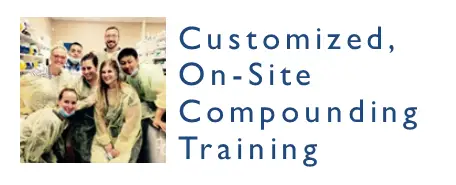
Your Site. Your Staff. Your Schedule
The ACA can present any of the current compounding training courses or business management training on location, or design a custom class (with or without CE) to meet a pharmacy’s needs.
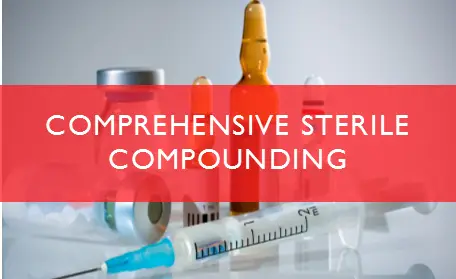
COMPREHENSIVE STERILE COMPOUNDING is an accredited 3-day, 20-hour (2.0 CEUs) certificate program designed for pharmacists and pharmacy technicians. Physicians and other healthcare professionals are welcome to attend. This program combines knowledge-based and application-based learning to provide foundational and practical training in sterile compounding and current USP standards.
Participants will receive instruction in sterile compounding principles, facility and engineering control requirements, aseptic technique, environmental monitoring, sterilization methods, documentation practices, quality assurance, and regulatory compliance related to USP <797> and USP <800>. Hands-on sterile compounding activities and aseptic processing exercises are incorporated throughout the program to reinforce sterile compounding concepts, contamination control practices, and best practices for patient safety. The program also addresses hazardous drug handling concepts and practical considerations associated with USP <800> to support the safe handling of hazardous medications and minimize exposure risks.
This course is designed to help participants strengthen sterile compounding competency, reinforce patient safety practices, and support compliance with current compounding standards.
Our low instructor/participant ratio allows for individual attention and interaction. The program is structured to demonstrate skills that can be immediately implemented by participants. Learn about the ACA Compounding Training Instructors at acainfo.org/instructors.
DAY ONE
Classroom
- Pre-Test
- Introduction to USP <797> and Sterile Compounding
- Aseptic Technique & Contamination Control
- Facility Design & Airflow Principles
- Engineering Controls & ISO Classifications
Lab Activities
- Lab Safety, Garbing & PPE
- Hand Hygiene & Gloving
- Cleaning & Disinfection of the PEC
- Basic Aseptic Manipulations
- First Air & Workflow Exercises
Lunch (45 min – 1 hour)
Continued Classroom & Lab Activities
Adjourn (approximately 5:00 pm)
DAY TWO
Classroom
- Maintaining Controlled Environments
- Environmental Monitoring
- Cleaning, Disinfection & Sporicidal Procedures
- Sterilization Methods & Beyond-Use Dating
- Documentation & Quality Assurance
Lab Activities
- Garbing Competency
- Sterile-to-Sterile Media Fill Testing
- Filtration & Sterilization Exercises
- Visual Inspection & Labeling Verification
- Documentation Review & Workflow Reinforcement
Lunch (45 min – 1 hour)
Continued Classroom & Lab Activities
Adjourn (approximately 5:00 pm)
DAY THREE
Classroom
- USP <800> Hazardous Drug Handling
- PPE & Engineering Controls
- Assessment of Risk
- Regulatory & Legal Framework for Compounding
- FDA, USP & State Board Oversight
- Enforcement Risks & Compliance
Demonstration Activities
- Hazardous Drug Workflow Demonstrations
- PPE Reinforcement
- Cleaning & Decontamination Concepts
- Final Competency Reinforcement Activities
Post-Test / Course Wrap-Up
Adjourn (approximately 12:00 pm)
At the conclusion of the Comprehensive Sterile Compounding Certificate Program, participating pharmacists, pharmacy technicians, and healthcare professionals will be able to:
Introduction to Sterile Compounding and USP <797> Overview (3h)
UAN: 0201-0000-26-018-L07-P/T | Knowledge Based
- Define sterile compounding and differentiate it from nonsterile compounding
- Describe the scope and purpose of USP <797> and its role in sterile compounding practice
- Identify categories of compounded sterile preparations (CSPs) and their general characteristics
- Explain fundamental principles of aseptic technique and sources of contamination
- Describe the role of quality assurance and quality control in sterile compounding
- Identify basic components of sterile compounding environments, including primary and secondary engineering controls
Sterile Compounding Facilities, Engineering Controls, and Airflow Principles (3h)
UAN: 0201-0000-26-019-L07-P/T | Knowledge Based
- Describe facility design requirements for sterile compounding, including buffer rooms, anterooms, and segregated compounding areas
- Explain the function and differences between primary and secondary engineering controls
- Describe ISO classification levels and their role in maintaining air quality
- Explain airflow principles, including first air and unidirectional airflow, in sterile compounding environments
- Differentiate between positive and negative pressure environments and their appropriate use
- Identify factors that contribute to contamination risk within sterile compounding facilities
Maintaining Sterile Compounding Environments and Aseptic Processing (4h)
UAN: 0201-0000-26-020-L07-P/T | Application Based
- Demonstrate proper cleaning, disinfection, and sporicidal application techniques within sterile compounding areas
- Perform environmental monitoring procedures, including viable air and surface sampling
- Apply appropriate responses to environmental monitoring excursions and action levels
- Demonstrate proper staging and introduction of equipment and supplies into the PEC and SEC
- Perform aseptic techniques, including maintaining first air and avoiding contamination (shadowing)
- Select and apply appropriate sterilization methods (steam, dry heat, filtration) based on formulation characteristics
- Operate sterilization equipment (e.g., autoclave) following appropriate procedures and documentation requirements
- Perform filter integrity testing (e.g., bubble point test) and interpret results
- Apply beyond-use date (BUD) principles to compounded sterile preparations
- Perform required release checks, including visual inspection and labeling verification
Documentation, Quality Assurance, and Compliance in Sterile Compounding (3h)
UAN: 0201-0000-26-021-L07-P/T | Knowledge Based
- Describe the key documentation requirements for sterile compounding according to USP <797>
- Identify the components of a Master Formulation Record (MFR) and Compounding Record (CR)
- Outline the framework and purpose of a quality assurance (QA) program in sterile compounding
- List essential elements required in standard operating procedures (SOPs)
- Explain the role and importance of Certificates of Analysis (COAs) in component selection
- Recognize common resources used to support sterile compounding documentation and decision-making
Regulatory and Legal Framework for Sterile Compounding (3h)
UAN: 0201-0000-26-022-L03-P/T | Knowledge Based
- Identify key federal and state regulations governing sterile compounding
- Describe the differences between traditional compounding (503A) and outsourcing facilities (503B)
- Explain the role of the FDA, USP standards, and state boards in regulating compounding practice
- Summarize circumstances under which compounding is permitted and when it is restricted
- Define the concept of “essentially a copy” and its implications for compounding
- Recognize the purpose and limitations of FDA guidance documents in compounding practice
- Discuss enforcement risks and the potential consequences of non-compliance
Hazardous Drug Handling and USP <800> Compliance (4h)
UAN: 0201-0000-26-023-L07-P/T | Knowledge Based
- Define hazardous drugs and associated health risks
- Describe USP <800> requirements for hazardous drug handling
- Identify drugs that must be included on a facility’s hazardous drug list
- Differentiate between containment strategies and engineering controls
- Describe facility and environmental requirements
- Explain appropriate PPE selection and use
- Differentiate between deactivation, decontamination, cleaning, and disinfection
- Describe the role and responsibilities of the designated person
- Explain when an assessment of risk may be applied
ACA | ACVP Member
Non-Member
REGISTER EARLY & SAVE $70!
Special promotional pricing will be automatically applied to all registrations completed six weeks before the beginning of class. No code necessary; does not apply to pharmacy student fees, EVP, or ACA Compound Academy. The best value in compounding training just got a little better.
2026 Comprehensive Sterile Compounding
Date Selection for 2026 Comprehensive Sterile Compounding Classes

Want more flexibility and set your own study hours?
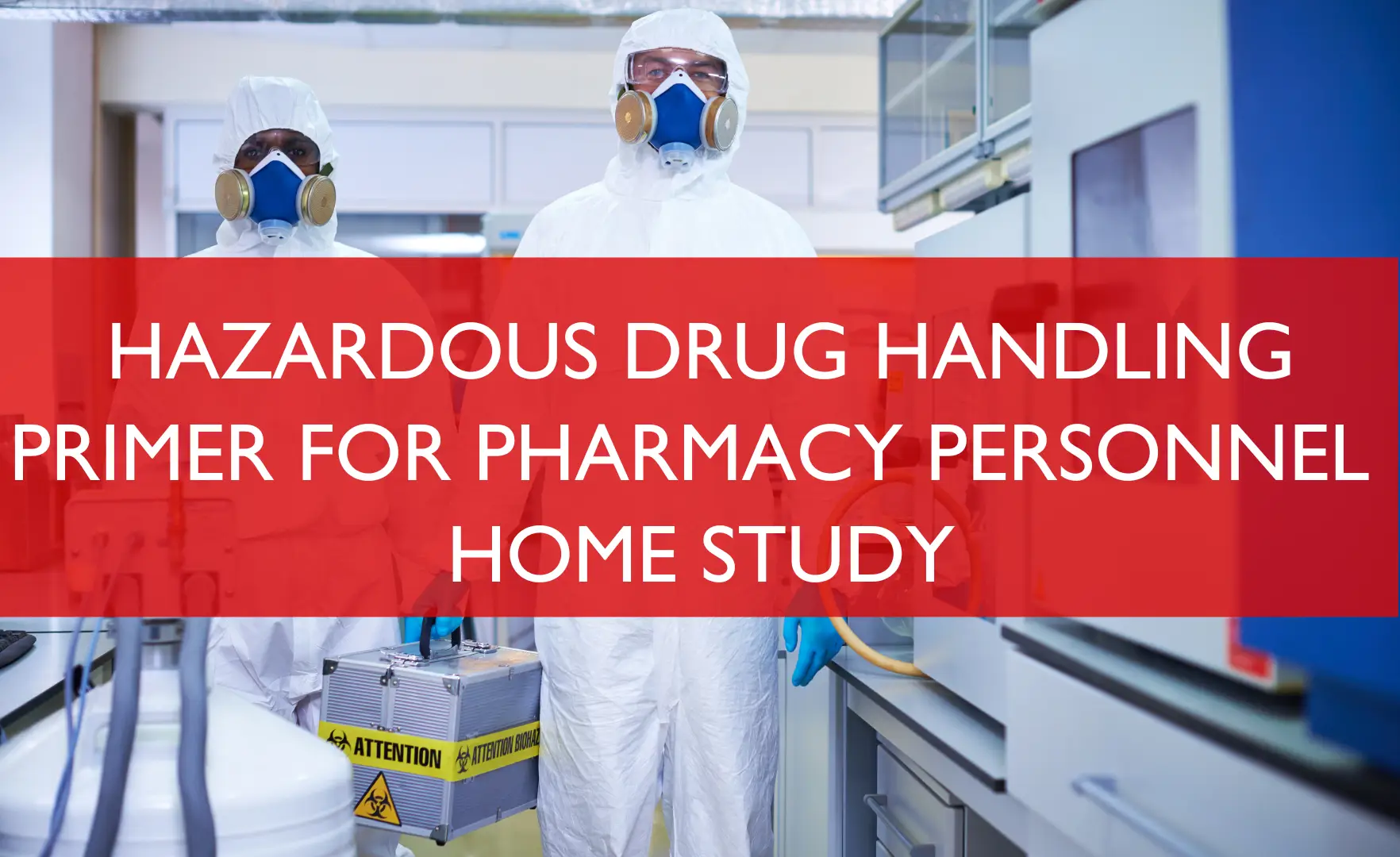
Hazardous Drug Handling — Primer for Pharmacy Personnel Home Study is a 6-hour knowledge-based home study learning program designed for pharmacy technicians and pharmacists that cover regulations and standards concerning handling hazardous drugs. An understanding of these regulations and standards will permit participants to incorporate best practices in the workplace and ensure the safety of compounded hazardous preparations and the personnel who handle them. Pharmacy technicians may complete this program as a tool to prepare for the CPhT Advanced Certification Examination in hazardous drug handling.
ATTENDEE CANCELLATION POLICY
If attendee cancels 30+ days before event – full refund less 5% administrative fee
If attendee cancels 29-14 days before event – 50% refund
If attendee cancels 13-1 days before event – no refund
On occasion, ACA may need to reschedule or cancel a class due to circumstances beyond our control, and attendees should plan travel accordingly. We recommend purchasing travel insurance or booking with an airline that will allow you to reschedule your flight if the need arises.
ENROLLMENT POLICY
Enrollment in ACA Pharmaceutical Compounding Training Courses is not limited to members of ACA. Participants registering as student pharmacists must be currently enrolled in an accredited school of pharmacy, working towards a pharmacy degree, and be able to provide proof of status. Participants registering as student pharmacists must not have previously received a degree in pharmacy and are not yet licensed to practice pharmacy. Class spaces for student pharmacists may be limited.
ACA CONTINUING PHARMACY EDUCATION PROGRAM
The mission of the American College of Apothecaries (ACA) Continuing Pharmacy Education Program is to conduct educational programs that empower pharmacy professionals to provide exceptional patient care. Learn more about the CPE Program’s Goals and Policies.
DISCLOSURES
The planners and faculty of this activity have no relevant financial relationships with ineligible companies to disclose. No commercial support was received for this activity.
Comprehensive Sterile Compounding Certificate Program has been approved for 20.0 contact hours (2.0 CEUs) of continuing education credit through live programming for pharmacists and pharmacy technicians. This certificate program includes a combination of knowledge-based and application-based continuing education activities related to sterile compounding, USP <797>, and USP <800> compliance.
The Comprehensive Sterile Compounding Certificate Program has been assigned Certificate Program Number (CPN) 0201-26-001-CP.
Individual sessions within the certificate program have been assigned the following ACPE Universal Activity Numbers (UANs):
- 0201-0000-26-018-L07-P/T — Introduction to Sterile Compounding and USP <797> Overview (Knowledge-Based)
- 0201-0000-26-019-L07-P/T — Sterile Compounding Facilities, Engineering Controls, and Airflow Principles (Knowledge-Based)
- 0201-0000-26-020-L07-P/T — Maintaining Sterile Compounding Environments and Aseptic Processing (Application-Based)
- 0201-0000-26-021-L07-P/T — Documentation, Quality Assurance, and Compliance in Sterile Compounding (Knowledge-Based)
- 0201-0000-26-022-L03-P/T — Regulatory and Legal Framework for Sterile Compounding (Knowledge-Based)
- 0201-0000-26-023-L07-P/T — Hazardous Drug Handling and USP <800> Compliance (Knowledge-Based)
The initial release date for this certificate program is 04/30/2026, and the planned expiration date is 04/30/2029.
Participants must complete all required program components, including attendance verification and evaluation requirements, to receive continuing education credit and the certificate of completion. Participants requesting ACPE credit must provide their NABP e-Profile ID and birthdate (MMDD). Any unclaimed credit with a participation date greater than six months old will not be eligible for processing.
The American College of Apothecaries, Inc. is accredited by the Accreditation Council for Pharmacy Education as a provider of continuing pharmacy education. All sessions carrying the ACPE program number are approved for continuing education credit.