sterile compounding

COMPOUNDING SIG: To 503B or Not to 503B: That is the Question?

2026-10-07T16:23:22-05:00September 15th, 2026|Categories: 503B, Business, Compliance, compounding, Compounding SIG, FDA, Outsourcing Facility, Pharmacy Law, Pharmacy Practice, Regulatory Issues|Tags: , , , , , , , , , , , , , , , , , , , , , , |

DID YOU MISS THE MEETING?

LISTEN NOW

Should your pharmacy consider 503B outsourcing? What are the opportunities, costs, and regulatory considerations?

Join us for a discussion of the 503B outsourcing facility model and how it differs from traditional pharmacy compounding. We’ll explore the current 503B market, capital and operational requirements, regulatory differences, and important considerations for pharmacies evaluating whether 503B may be right for their business.

The discussion will also include a separate look at controlled substances and the additional regulatory requirements and considerations that apply.

Whether you are considering entering the 503B space, partnering with a 503B facility, or simply want to better understand the differences, this SIG will provide valuable insight to help you make informed decisions.

Join us for this informative and timely discussion on one of the important questions facing compounding pharmacies today.

Erik Tosh, RPh, FACA, brings more than 40 years of pharmacy experience and nearly five decades of experience in healthcare, with a career spanning hospital pharmacy, independent community pharmacy, pharmaceutical compounding, and industry leadership. His extensive compounding experience includes serving as Director of Operations for a large sterile compounding facility that later became registered as a 503B outsourcing facility. In that role, he oversaw operations that included production, regulatory and compliance activities, purchasing, shipping, and the preparation of high-risk compounded medications for hospitals across the United States.

Tosh later served as Vice President of Compounding Support Services at Letco Medical, where he led compounding support initiatives, developed continuing education programs, provided technical training, and worked closely with professional pharmacy organizations. He retired in 2021.

In addition to his industry experience, Tosh has served as adjunct faculty at Western University College of Pharmacy and has presented ACPE-accredited education on pharmaceutical compounding. He is a past President and Chairman of the International Academy of Compounding Pharmacists and has contributed to professional publications including Remington: The Science and Practice of Pharmacy and the International Journal of Pharmaceutical Compounding.
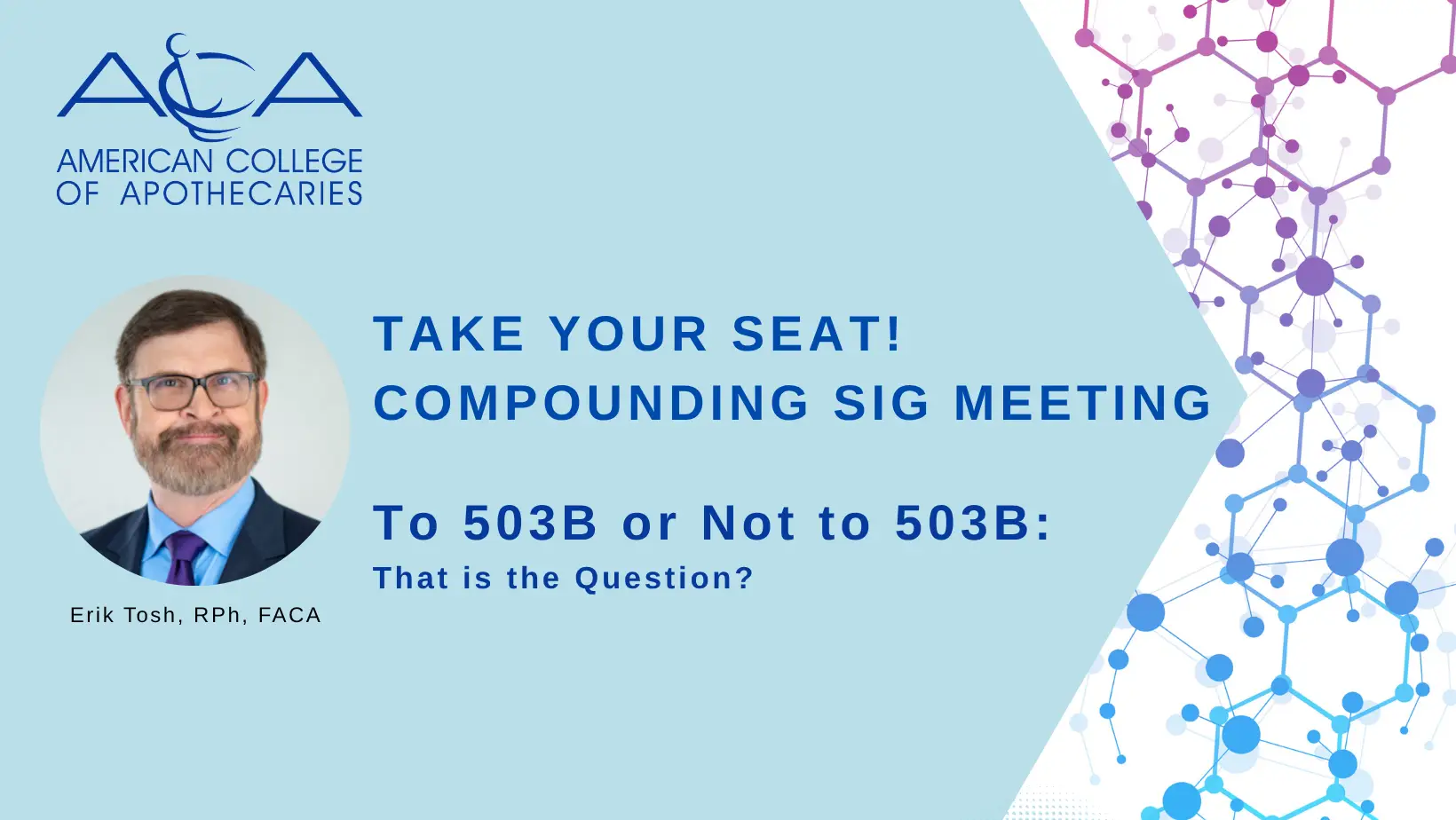
Considering the move to 503B? Join us for a discussion of what it takes to start or transition to a 503B Outsourcing Facility. We’ll begin with an overview of the key considerations involved, then open the conversation for attendees to ask questions, share experiences, and exchange perspectives.

This meeting will not offer CE.

LISTEN NOW
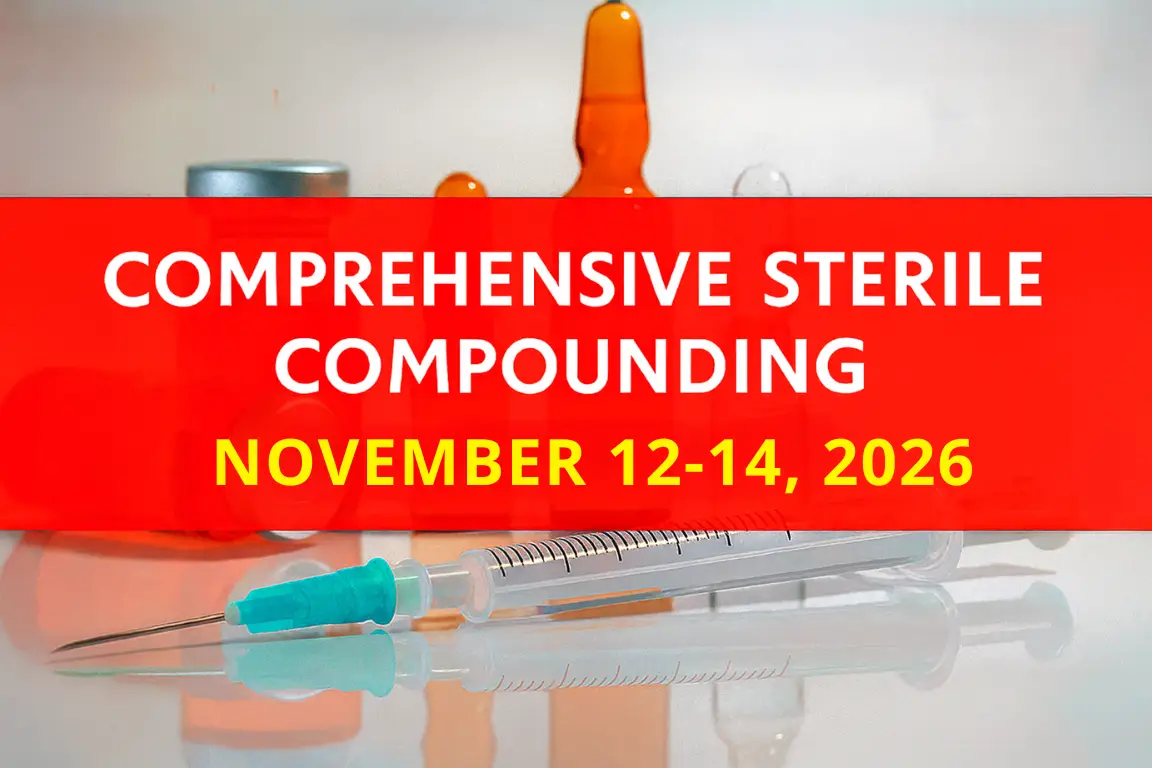
Sterile Compounding Certificate Program | November 12–14, 2026

2026-08-26T09:32:25-05:00August 26th, 2026|Categories: Certificate Program, compounding, Continuing Education, Hazardous drug handling, Pharmacy Practice, Regulatory Issues, Sterile Compounding, USP 797, USP 800|Tags: , , , , , , , , , , , , , , |

The Comprehensive Sterile Compounding Certificate Program is a live, in-depth training program designed for pharmacists and pharmacy technicians involved in sterile compounding. This certificate-based course provides a structured, practice-focused review of sterile compounding standards, regulatory requirements, documentation, training, and quality systems to support safe and compliant operations.

Participants will examine the legal and regulatory framework governing sterile compounding, including applicable FDA guidance and key USP standards such as USP <797> and USP <800>. Emphasis is placed on understanding how these requirements translate into daily practice and inspection readiness.

The program includes detailed instruction on documentation, quality assurance and quality control programs, policies and procedures (SOPs), and personnel training and competency requirements. Attendees will review expectations for facility design, environmental monitoring, equipment, and workflow as they relate to sterile compounding compliance.

A focused module on hazardous drug handling addresses facility requirements, engineering controls, PPE, personnel training, and assessment of risk, with alignment to current safety and regulatory expectations.

This certificate program combines didactic instruction and application-based learning, offering attendees the opportunity to strengthen their sterile compounding knowledge while reinforcing compliance, safety, and best practices.

Strengthen your sterile compounding skills and reinforce compliance with this hands-on certificate program. Registration is below.

What attendees said:

  • “This class was super helpful in increasing my knowledge and technique in the lab. I highly recommend it.”
  • “It’s a great class! Anyone want to get into sterile or the ones already doing it, should really consider taking this class.”
  • “With nearly 20 years of sterile compounding practice and exposure, this course reinforced my knowledge and skills in this area. I am more confident after this course.”
Loading...

The American College of Apothecaries (ACA) is accredited by the Accreditation Council for Pharmacy Education as a provider of continuing pharmacy education. ACA has accredited this knowledge/application-based certificate program for 20 contact hours (2.0 CEUs) of continuing education credit for pharmacists and pharmacy technicians.
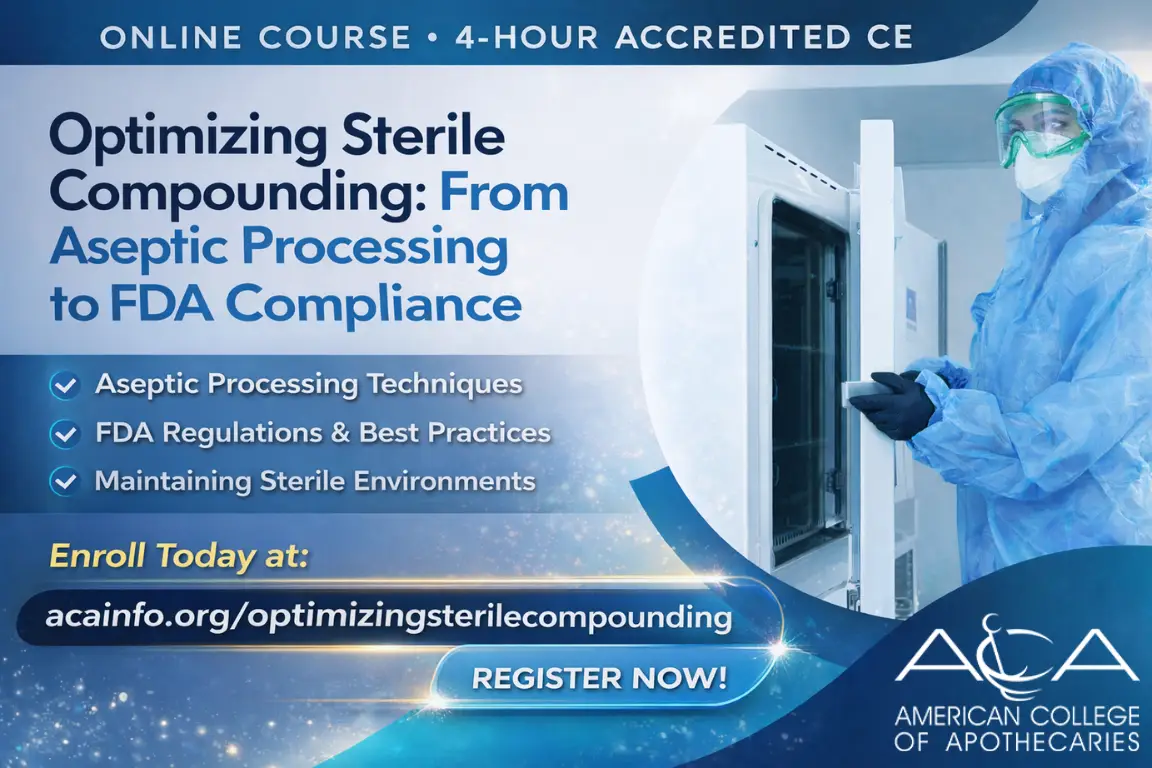
Optimize Sterile Compounding: An ACPE-Accredited 4-Hour Virtual Course

2026-04-16T10:17:06-05:00January 5th, 2026|Categories: Compliance, Continuing Education, FDA, Pharmaceutical Training, Pharmacy Practice, Regulatory Issues, Sterile Compounding, USP 797|Tags: , , , , , , , , , , , , , , |

This 4-hour accredited virtual CE course provides pharmacists and pharmacy technicians with essential knowledge related to aseptic processing and FDA compliance in sterile compounding.

Sterile compounding requires accuracy, consistency, and an understanding of current regulatory expectations. This course reviews key principles and requirements to help participants strengthen their foundational knowledge and stay current with evolving standards.

What You’ll Learn:
By the end of this engaging course, participants will be able to:

1️⃣ Describe aseptic processing and terminal sterilization methods
2️⃣ Explain release testing requirements, including visual inspection, sterility, and endotoxin testing
3️⃣ Identify and interpret key FDA guidance documents related to sterile compounding
4️⃣ Recognize appropriate component selection for compounded preparations
5️⃣ Understand the role of certificates of analysis and perform related calculations

Who Should Attend?
Perfect for pharmacists, pharmacy technicians, and healthcare professionals involved in sterile compounding.

Strengthen sterile compounding practices and reinforce regulatory readiness through focused, practical training designed for pharmacy professionals.

Optimizing Sterile Compounding: From Aseptic Processing to FDA Compliance

Date Selection For 2026

  • This course is delivered in a live virtual classroom format.
    Maximum Class Capacity: 12 participants


The American College of Apothecaries (ACA) is accredited by the Accreditation Council for Pharmacy Education as a provider of continuing pharmacy education. ACA has accredited this knowledge-based program for 4 contact hours (0.4 CEUs) of continuing education credit for pharmacists and pharmacy technicians.
Go to Top