compounding training

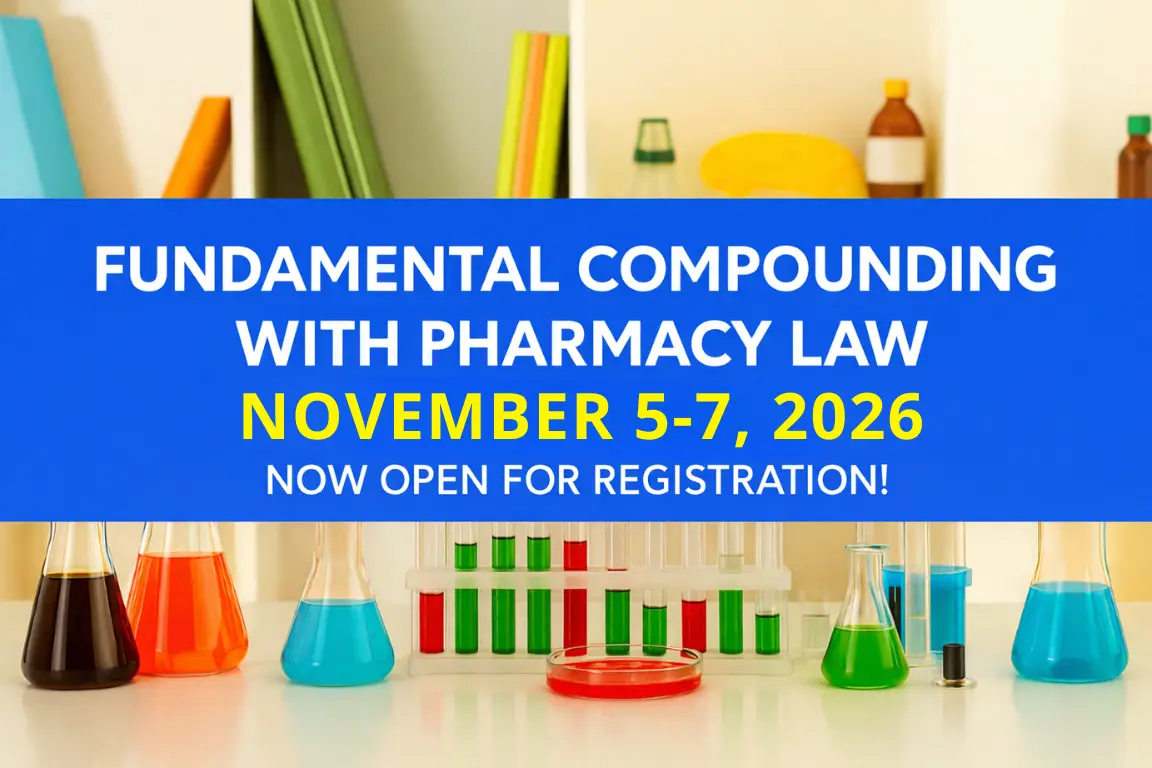
Fundamental Compounding with Pharmacy Law | August 6-8, 2026

2026-05-07T10:56:18-05:00April 15th, 2026|Categories: Continuing Education, compounding, compounding training, Hazardous drug handling, Pharmacy Law, Pharmacy Practice, Regulatory Issues, USP 795|Tags: , , , , , , , , , , , , , , |

Fundamental Compounding with Pharmacy Law is a live, multi-day compounding course designed for pharmacists, pharmacy technicians, and pharmacy professionals seeking a strong foundation in both compounding practices and regulatory compliance. This course integrates compounding principles with pharmacy law to support safe, compliant, and high-quality compounding operations.

Participants will review the regulatory framework governing pharmacy compounding, including applicable federal and state considerations and key United States Pharmacopeia (USP) standards. Emphasis is placed on documentation, quality assurance, policies and procedures, and compliance requirements essential to day-to-day compounding practice.

The course includes instruction and hands-on training in common nonsterile dosage forms, such as capsules, molded dosage forms, and topical preparations. Participants will learn proper techniques, equipment use, quality control measures, and best practices to support consistency and patient safety.

A dedicated session on hazardous drug handling addresses requirements for facilities, engineering controls, PPE, and personnel training, with alignment to applicable USP standards and safety expectations.

This program combines didactic instruction and application-based learning to reinforce compounding knowledge, regulatory awareness, and practical skills in a structured, in-person environment.
Strengthen your foundation in compounding and pharmacy law through this practical, live training. Registration is below.

What attendees said:

  • “The ACA Fundamentals of Compounding Course was one of the best decisions I’ve made for my pharmacy. The small, hands-on setting, focus on USP 795/800, and opportunity to network with both new and experienced compounders made it invaluable. Highly recommend!”
  • “The instructor effectively highlighted important topics and used real-world examples to support learning. The small class size made it easy to ask questions and have open discussions.”
  • “The class was great. The networking with other pharmacists from different areas was great. I was immediately able to take the knowledge learned and apply it in my store.”
Loading...

The American College of Apothecaries (ACA) is accredited by the Accreditation Council for Pharmacy Education as a provider of continuing pharmacy education. ACA has accredited this knowledge/application-based certificate program for 21 contact hours (2.1 CEUs) of continuing education credit for pharmacists and pharmacy technicians.
Canadian Non-Sterile Compounding Standards: Continuing Education for Pharmacy Professionals

2026-04-02T09:23:13-05:00February 10th, 2026|Categories: Compliance, compounding, compounding training, Continuing Education, Documentation, Home Study, Pharmaceutical Training, Pharmacy Practice, Policies & Procedures, Quality Assurance, Regulatory Issues, Risk Management, SOPs|Tags: , , , , , , , |

This 6.0-hour (0.6 CEUs) knowledge-based home study is designed for pharmacists and pharmacy technicians involved in non-sterile compounding who want a clear understanding of Canadian regulatory standards and how they apply to day-to-day practice. The course focuses on reviewing current standards and best practices used to evaluate compounding procedures, develop pharmacy protocols, and apply appropriate quality controls to support the safety and effectiveness of non-sterile preparations for both patients and staff.


Documents Covered

  • Guidance on Pharmacy Compounding of Non-Sterile Preparations

  • Model Standards for Pharmacy Compounding of Non-Sterile Preparations

  • Printable and fillable forms to support documentation and recordkeeping


Topics Covered

  • Canadian regulatory guidelines and non-sterile compounding standards

  • Identifying risks and gaps in current compounding practices

  • Requirements for different levels of non-sterile compounding

  • Facility, equipment, and documentation expectations

  • Product and preparation requirements

  • Additional considerations for Level C non-sterile compounding


Who This Home Study Is For

  • Pharmacists involved in non-sterile compounding

  • Pharmacy technicians supporting compounding activities

  • Pharmacy professionals looking for a clearer understanding of Canadian non-sterile compounding standards

Review Canadian non-sterile compounding standards and understand how regulatory expectations apply to everyday pharmacy practice. 

What participants said:

  • “This course provided a very thorough and succinct explanation of all relevant information needed to safely implement compounding into the pharmacy workflow.”
  • “The instructor very clearly explained these concepts in a well-organized manner for the audience to comprehend.”
  • “The session provided a clear overview of current guidelines, easy access to commonly used compounding resources, and practical checklists that support safe compounding practices.”

Registration is below

Note: It is not necessary to create a Lecture Panda account to register for this home study.

Important note for Canadian participants:
Participants who are not receiving ACPE credit, including Canadian learners whose provincial regulatory bodies may not accept ACPE-accredited activities, will receive a Certificate of Completion upon successful completion of the post-test and evaluation. Certificates may be downloaded for personal records. Canadian pharmacists and pharmacy technicians are encouraged to confirm with their provincial college whether ACPE-accredited activities or certificates of completion meet their continuing competency requirements.


The American College of Apothecaries (ACA) is accredited by the Accreditation Council for Pharmacy Education as a provider of continuing pharmacy education. ACA has accredited this knowledge-based program for 6 contact hours (0.6 CEUs) of continuing education credit for pharmacists and pharmacy technicians.
Dermatological Compounding Course | September 18–19, 2026

2026-03-19T12:50:53-05:00December 16th, 2025|Categories: Continuing Education, compounding, compounding training, Dermatological Compounding, Dermatology, Pharmacy Practice, Regulatory Issues|Tags: , , , , , , , , , , , , , , |

Dermatological Compounding is a live, practice-focused training course designed for pharmacists, pharmacy technicians, and pharmacy professionals involved in the preparation of customized topical therapies. This program provides an in-depth review of skin pathophysiology, dermatologic disease states, topical dosage forms, and formulation strategies to support patient-specific treatment.

Participants will examine common dermatological conditions, including eczema, dermatitis, psoriasis, and inflammatory skin disorders, with discussion of disease mechanisms and therapeutic goals. Instruction emphasizes selecting appropriate dosage forms and bases based on skin type, lesion characteristics, and patient preference.

The course explores topical drug therapy options, including corticosteroids, calcineurin inhibitors, keratolytics, emollients, anesthetics, and combination formulations. Attendees will review drug stability, penetration, potency considerations, and excipient selection to optimize safety and effectiveness.

A dedicated component addresses compounded topical pain management, including evaluation of pain types, pharmacologic targets, and formulation strategies that support localized therapy while minimizing systemic exposure.

This program blends clinical knowledge and practical application, equipping participants with the skills and confidence to compound dermatologic preparations that meet individual patient needs while maintaining quality and safety standards.

Strengthen your dermatological compounding skills with this live, hands-on course focused on customized topical therapies and patient-centered care.

What attendees said:

  • “The course was highly informative and provided a rich set of materials and resources that support pharmacists looking to elevate their compounding practice.”
  • “The content was practical and easy to apply, with clear explanations that strengthened my confidence in dermatological compounding.”
  • “The depth of information and real-world examples made this course both engaging and highly beneficial.”
Loading...

The American College of Apothecaries (ACA) is accredited by the Accreditation Council for Pharmacy Education as a provider of continuing pharmacy education. ACA has accredited this knowledge/application-based program for 15 contact hours (1.5 CEUs) of continuing education credit for pharmacists and pharmacy technicians.
Veterinary Compounding Essentials Course | October 16–17, 2026

2026-04-16T11:35:00-05:00December 15th, 2025|Categories: Continuing Education, compounding, compounding training, Pharmacy Practice, Regulatory Issues, Veterinary Compounding, Veterinary Medicine|Tags: , , , , , , , , , , , , , |

Veterinary Compounding Essentials is a live, comprehensive training course designed for pharmacists, pharmacy technicians, and pharmacy professionals who compound medications for animal patients or are interested in expanding into veterinary compounding practice. This program provides a practical foundation in veterinary pharmacotherapy, regulatory requirements, compounding techniques, and patient safety considerations unique to non-human species.

Participants will explore the regulatory framework and professional standards that impact veterinary compounding, including prescription requirements, verification processes, and the veterinarian-client-patient relationship (VCPR). The course addresses differences among companion animals, performance animals, and food-producing animals, emphasizing how regulations and drug use vary by species and intended use.

Instruction includes veterinary drug information resources, toxicology considerations, and species-specific risks associated with drugs, excipients, flavors, and preservatives. Attendees will review common veterinary dosage forms, administration devices, and formulation considerations to support safe and effective compounding.

The program also covers calculations, hands-on compounding principles, and strategies for developing and growing a veterinary compounding practice, including communication with veterinarians and practice marketing considerations.

This course blends knowledge-based and application-based learning, offering attendees practical tools and confidence to support veterinary patients while maintaining compliance and safety.

Expand your skills in veterinary compounding and enhance patient care for animal patients with this live, comprehensive training course.

What attendees said:

  • “It was a very informative course and small class made it easy for one on one question with the instructor. The lab experience was great as we were able to make multiple formulas and learned new techniques to incorporate in compounding practice at my store. I had chance to meet other pharmacist who have similar vision as mine and shared ideas with each other to excel in business. Lunch was great on both days.”
  • “The Veterinary Compounding Essentials course provided an excellent overview of the key requirements for compounding medications for animals. The instructor was highly knowledgeable and tailored the content to meet our individual needs. The hands-on lab experience, combined with expert supervision, gave me the confidence to perform compounding independently.”
  • “This course was so fun and I enjoyed learning about everything vet pharmacy related. This course was the best decision I made to help further my compounding knowledge post graduation!”
Loading...

The American College of Apothecaries (ACA) is accredited by the Accreditation Council for Pharmacy Education as a provider of continuing pharmacy education. ACA has accredited this knowledge/application-based program for 15 contact hours (1.5 CEUs) of continuing education credit for pharmacists and pharmacy technicians.
Scholarship Winner Attends ACA’s Veterinary Compounding Essentials Program

2025-10-31T14:35:05-05:00November 1st, 2023|Categories: compounding training, Continuing Education, Members In The News, Pharmaceutical Training, Pharmacists, Pharmacy Practice, Pharmacy Technicians, Student Pharmacist, Veterinary Compounding, Veterinary Medicine|Tags: , , , , , , |

ACA’s Veterinary Compounding Essentials program provides fundamental techniques for effectively growing the veterinary compounding practice, including calculations, proper safety practices, hands-on compounding, and marketing.

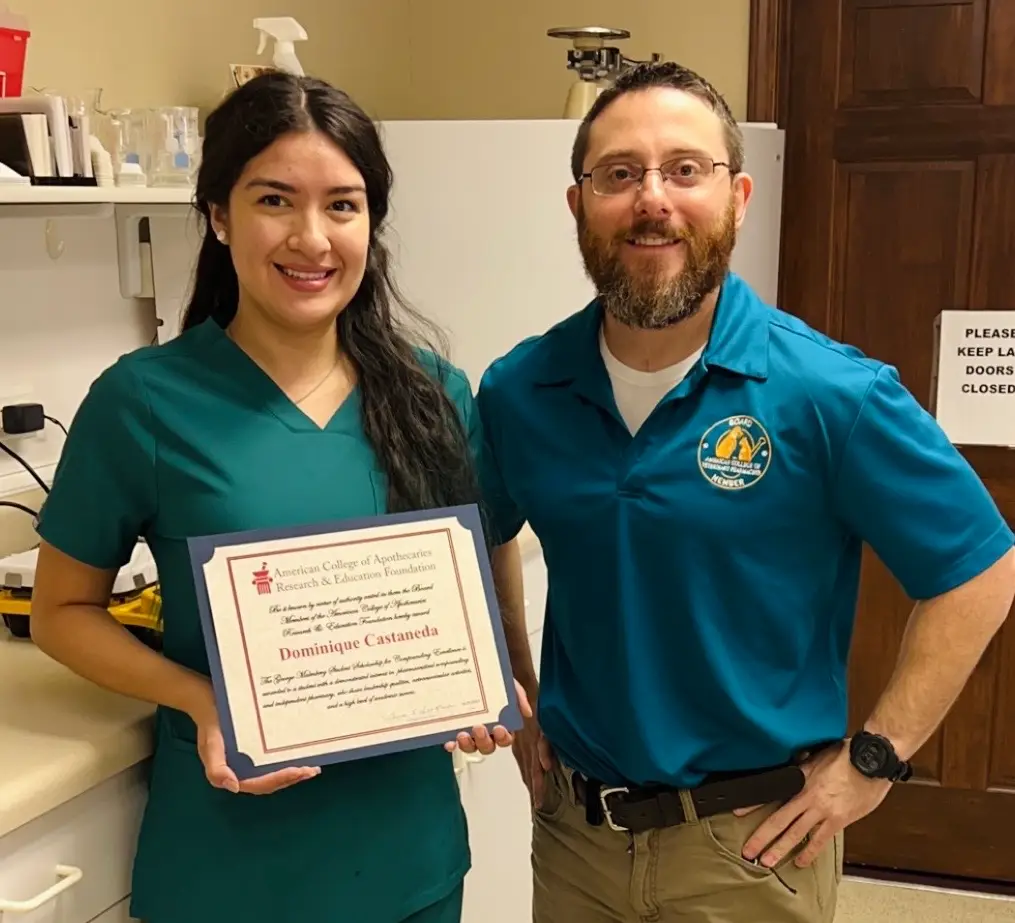
ACA would like to proudly announce, Dominique Castaneda, an American College of Veterinary Pharmacists student pharmacist member and winner of the ACA Research & Education Foundation George Malmberg Student Scholarship for Compounding Excellence, for attending our Veterinary Compounding Essentials course and giving her positive thoughts about the program.

Dominique And Connor Image 2

“The Veterinary Compounding Essentials program offers bite-size information that is easily digestible, especially for student pharmacists. The staff is open and friendly. This is an incredible opportunity that I am so very grateful for.”


—Dominique Castaneda, October 2023

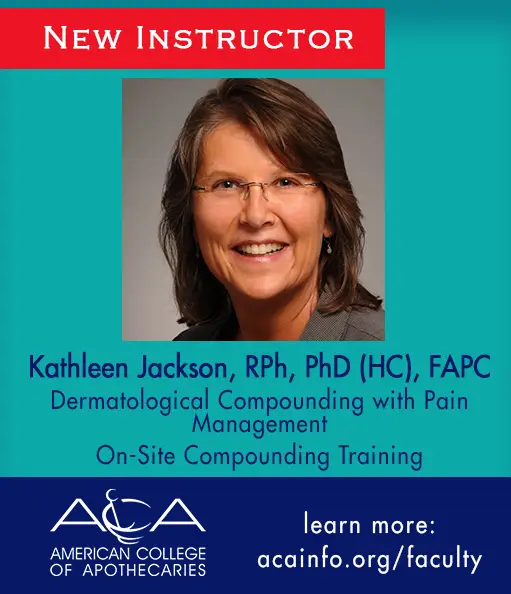
ACA Welcomes New Dermatological Compounding Training Instructor, Kathleen Jackson

2025-11-02T14:42:39-06:00September 4th, 2020|Categories: News Release, compounding training|Tags: |

We are proud to announce that Kathy Jackson, RPh, PhD (HC), FAPC, has joined the ACA Faculty and will be teaching our Dermatological Compounding with Pain Management course this Fall as well as providing on-site training.

Kathy has over three decades of experience in compounding, beginning with owning and operating her own community pharmacy and later becoming a PCAB Surveyor and independent consultant. She has aided 503(a) and (b) pharmacies with FDA inspections and 483 responses.

Kathy is a fellow of IACP (now APC) and a certified sterile compounding trainer. She served two terms on the IACP board, and as the President of the IACP Foundation, as well as chair of the compounding section of the Texas Pharmacy Association. In 2015-2016, she co-authored two IJPC articles on Root Cause Analysis. In 2018, she achieved the CISC certification from Critical Point for State Board Inspectors. Kathy’s passion lies in helping pharmacies maintain compliance through self-assessment.

Kathy’s wide range of experience as a pharmacy owner, PCAB surveyor, and consultant gives her a unique perspective on the practicalities of how class attendees can implement what they’ve learned while maintaining high quality standards and compliance. We are fortunate to have her join our faculty.

Go to Top